28 Years Later: The Bone Temple★
Currently Streaming
This title is available to watch on Netflix. Our technical analysis confirms availability as of 03-31-26.
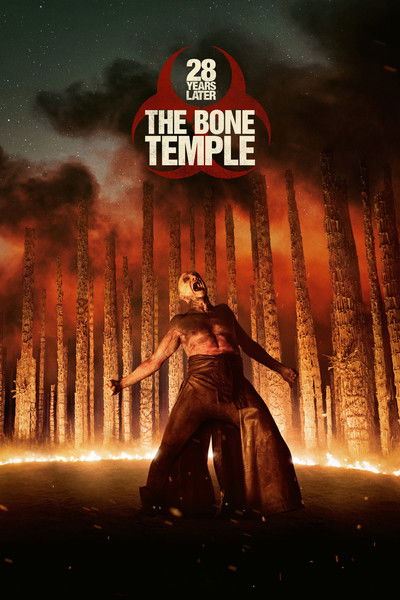
The radical divergence between the critical reception (36% on Rotten Tomatoes) and the audience's embrace (7.6 on IMDb) of '28 Years Later: The Bone Temple' points to a film that has brazenly abandoned the grounded, gritty nihilism of its predecessors in favor of a surrealistic, high-concept sci-fi mythos. Where Danny Boyle once used the Rage Virus to explore the collapse of social contracts, this new chapter treats the apocalypse as a fait accompli, focusing instead on the ritualistic evolution of the infected. The direction is remarkably tactile; the "Bone Temple" itself - a terrifying architectural mass of calcified remains in the heart of a reclaimed London - is a triumph of production design that suggests a biological intelligence at work rather than mere mindless aggression. The script, however, is where the friction lies. It trades the lean, propulsive survivalism of the original for a dense, almost liturgical exploration of what comes after the end of the world. While critics have labeled this "bloated" or "over-explained," the performances, particularly from a lead who conveys thirty years of accumulated trauma through silence rather than monologue, ground the more esoteric swings in a necessary human exhaustion.
In terms of comparative value, 'The Bone Temple' feels less like a sequel to '28 Days Later' and more like a thematic cousin to 'Children of Men' cross-pollinated with the folk-horror dread of 'Midsommar.' It moves away from the "sprint-and-scream" mechanics of the 2000s zombie revival, opting instead for a haunting, wide-angle aesthetic that emphasizes the indifference of nature. While '28 Weeks Later' was an exercise in escalating chaos, 'The Bone Temple' is an exercise in eerie, post-human order.
The verdict is that '28 Years Later: The Bone Temple' is a flawed but fascinating mutation of the franchise. It is a film that demands you accept its evolution from a survival thriller into a dark, sci-fi odyssey. If you are looking for the kinetic terror of the 2002 original, you may find the 36% critical score justified. However, for those interested in a bold, visual-heavy meditation on how life - and horror - persists and organizes itself three decades after the lights go out, this is the most ambitious entry in the series to date. It is a polarizing, beautiful, and deeply strange piece of cinema that prioritizes world-building over easy thrills.
FINAL TAKE:
A polarizing but beautiful mutation of the franchise that trades survivalist grit for a haunting, high-concept sci-fi odyssey. While its dense script may alienate those seeking traditional zombie thrills, it stands as a visually stunning and ambitious meditation on how horror organizes itself decades after the collapse. Reviewed on: flatscreen LCD with surround sound on 03-31-26Quick Answers
Is 28 Years Later: The Bone Temple streaming on Netflix?
Yes — as of September 2026, 28 Years Later: The Bone Temple is streaming on Netflix.
How long is 28 Years Later: The Bone Temple?
The runtime is 110 min.
How well was 28 Years Later: The Bone Temple rated?
It holds 36% on Rotten Tomatoes and 7.6/10 on IMDb.
When was 28 Years Later: The Bone Temple released?
It was released on March 31, 2026.
Explore More Guides
Enjoyed this review? Check out our definitive guide to the Best Horror Movies on Netflix.